
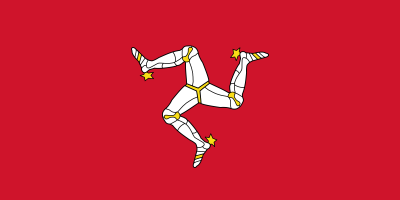
The Isle of Man (or simply: Mann) is a self-governing British Crown Dependency in the Irish Sea, between Great Britain and Ireland. The island is known for its rugged coastline, rolling green hills, and a strong sense of cultural identity rooted in its Celtic and Norse heritage. It holds traditions like the famous Isle of Man TT, a world-renowned annual motorcycle race held on public roads, and its landscape ranges from sandy beaches in the north to rocky cliffs and higher ground like Snaefell, the island’s highest peak. Its capital, Douglas, is the largest city in Mann. Situated on the east coast, the city is the main hub for business, government and tourism, and serves as the island’s economic and social centre. It holds key landmarks like the Douglas Harbour — which connects the island to the UK and Ireland by ferry, the Douglas Bay Horse Tramway — one of the last remaining horse-drawn tram systems in the world, and the Manx Museum — where to learn about the island’s history, Viking influences and maritime heritage.
Coastal, river and urban flooding, alongside coastal erosion.
Most minor traffic and driving offences are dealt via Fixed Penalty Notices (FPNs) either on-the-spot or by post, while more serious violations go to court, which can lead to higher fines, penalty points or a driving ban. The Isle of Man uses a penalty points system similar to the UK, where accumulating 12 points within 3 years results in a minimum 6-months driving ban. Fines can be paid online, at post offices or at court offices. If driving a rental, the rental company may pass on any fines, then charge you admin fees, and if you don’t pay, your details can be placed on a public register of unpaid fines, which may affect your credit rating, and if fines are left ignored — specifically tourists, they can cause legal enforcement and issues with future visits.
Common traffic fines include;
The official languages of the Isle of Man are English and Manx (Gaelic).
Vehicles drive on the left side of the road. The minimum driving age is 16, but the minimum renting age is generally 21 – 23, and that many rental companies require drivers to have held a valid driving licence for at least 12 months (some requiring 36 months), along with charging additional surcharges to drivers under 25. UK drivers don't need an an International Driving Permit (IDP) to drive in the Isle of Man, unless they possess an older paper licence. If you're bringing your own car to the island, you may need to register it with the Isle of Man authorities. And if you're a newly qualified driver (within the first year after full licence issued), you must display red 'R' (Restricted) plates at the front and back of your vehicle at all times, and that you cannot exceed 50 mph, even on roads that have no upper speed limit.
Roads can be narrow and winding, with some open rural roads having no national speed limits (derestricted zones), and some may close temporarily or become one-way during the Isle of Man TT races. Even though driving is often described as easy and low-compared to the UK, still be cautious when driving — many tourists often drive ridiculously fast on derestricted roads. Also, many parking areas require a parking disc (not pay-and-display), which are available at ferry terminals, airports and rental companies.
Unleaded petrol (95/premium, sometimes) and diesel are the most common fuel types in the Isle of Man, where as LPG is less common and very limited. Many stations are self-service, where payment is done at the pump, or inside the kiosk/convenience store after fuelling. Card is widely accepted and contactless usually works, but UK fuel cards may not always be accepted. Prices may be similar to or slightly higher than the UK, but are sometimes subject to sudden changes due to supply shipments. Also, since fuel arrives by tanker shipments, temporary shortages do occasionally happen, and bad weather can delay deliveries.
There are stations spread across the island around towns and main routes, but not in huge numbers, and most stations are open early morning to late evening (roughly 6:30am – 10:30pm) rather than 24/7. If you are travelling across mountain roads, or to rural/coastal areas, refuel before departure, and don't let your tank run below half. Also, during events like the Isle of Man TT, fuel demand will spike dramatically, with long queues, slight price increase and occasional shortages.
Some open rural roads have no national speed limits (derestricted zones), but dangerous driving is still illegal and enforced.
The BAC limit is 0.08%.
Mandatory for all occupants.
Children under 12 years or 135cm must use approved, size-appropriate child restraints. Children under 3 must be in a car seat, even in the rear, with very limited exceptions.
There is no mandated kit list in Mann. However, authorities and breakdown services strongly advise you to have a basic emergency kit:
Check out more of our Country Guides: