
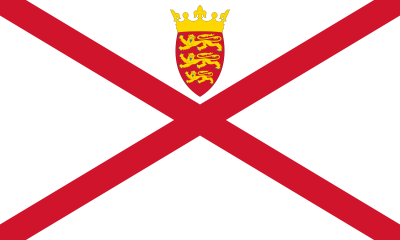
Jersey, or known as the Bailiwick of Jersey, is an autonomous and self-governing British Crown Dependency in Northwestern Europe — 14 miles off the Cotentin Peninsula of north-west France. It is the largest of the Channel Islands, known for its mild climate, scenic coastline, and a blend of British and French cultural influences. The island also has a rich history shaped by its strategic location — with remnants of German fortifications from World War II, and a strong economy driven by finance, tourism and agriculture. Jersey is especially famous for its dairy products, particularly those from the Jersey cattle, which produce rich milk used to make butter and cream.
Its capital, Saint Helier, is the largest town in Jersey, and the political, commercial and cultural centre of the island. The town has a lively atmosphere, especially during summer, and is home to several key features like a busy harbour connecting Jersey to the UK and France, a vibrant shopping district with markets and local boutiques, historical sites such as Elizabeth Castle, which sits on a tidal island in the bay, and museums and galleries reflecting Jersey’s heritage.
Coastal flooding, extreme weather and storm surges.
Many traffic/driving offences are handled locally in Jersey. If you commit a offence, you may be asked to attend a Parish Hall enquiry instead of immediate court or a on-the-spot fine, which can result in a warning, a fine, or an escalation to court. If you're driving a rental, the rental company may add admin fees with the fine, and if you left a fine unpaid, it can be pursued later, and can cause issues for future travels to Jersey.
Common traffic/driving offences include;
The official languages of Jersey are English, Jèrriais and Jersey Legal French.
Vehicles drive on the left, like in the UK. The minimum age to drive in Jersey is 17, while the renting age is 20 or 21, but rental companies often require drivers to have held a valid licence for at least 12 months, and would apply a 'young driver' surcharge to drivers under 25. UK drivers don't need an International Driving Permit (IDP) to drive in Jersey, unless they hold an older paper licence, or the rental company requires one.
Many roads, especially rural roads, can be very narrow and winding, sometimes with tight lines and blind corners. Be sure to drive slowly and patiently — as it is essential. Even though Jersey share the same traffic laws as the UK, there are some key differences; yellow lines across a junction acting as STOP lines, 'Filter in Turn' junctions where there is no priority — drivers take turns fairly, yellow lines along the road indicating 'no stopping', and no red-amber light phase on traffic lights — goes directly from red to green.
Jersey uses a PayCard system for parking, where you would use a scratch card and display it in your car instead of paying at a machine. These cards can be purchased at local shops, petrol stations, supermarkets and post offices. Major rental car companies can offer electric or classic cars, and renting normally cost £35 per day. However, since Jersey is a small island, it's easy to get around even without a car. A car is best if you want to explore the coast, hidden beaches and rural areas.
The most common fuel types in Jersey are unleaded petrol (95) and diesel (ULSD), but premium petrol, renewable fuels (e.g., bio-free) and EV charging are available, not may not be as dense as mainland UK. Most stations are self-service, where you would either pay at the pump or inside the kiosk/convenience shop after filling. Many stations also have air/water for tyres. Card is widely accepted, while contactless works almost everywhere, and cash is always accepted, but is less common. Since Jersey is small, there are a limited amount of fuel stations, and are often in towns and villages. If you're planning to drive to the coast, make sure to fill up beforehand and to not let your tank run low. Also, fuel prices can vary, with different stations possibly charge different prices on the same day, so be careful.
The BAC limit is 0.08%.
Mandatory for all occupants.
Children under 12 years or under 135cm tall must use an appropriate child car seat. Under 14s must use appropriate restraints, with specific exceptions for taxis and unexpected emergencies.
Jersey doesn't require a full mandatory equipment kit, unlike France or the rest of mainland Europe, but if stopped by police, you must be able to produce the documents above.
Check out more of our Country Guides: