
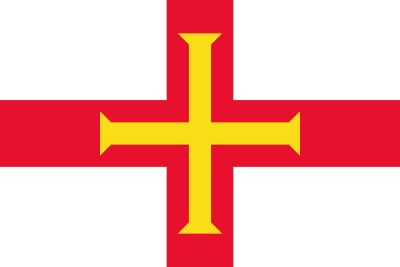
Guernsey, or known officially as the Bailiwick of Guernsey, is a self-governing British Crown Dependency located in the English Channel, off the coast of Normandy, France. The Bailiwick is an archipelago consists of several islands, with the main ones being Alderney, Guernsey, Herm and Sark. Each of them have their own local characteristics, like with Sark, for example, is historically known for its feudal system, and Alderney having its own parliament. Guernsey is a significant international finance centre, that combines British and Norman-French influences, with a stable economy driven by banking, insurance, investment funds, agriculture — especially the famous Guernsey dairy cattle, and tourism.
The capital of the Bailiwick is St Peter Port, located on the east coast of Guernsey island. It is a picturesque harbour town known for its steep cobbled streets, historic buildings, and marina filled with yachts and fishing boats. St Peter Port serves as the commercial and administrative hub of the Bailiwick, containing notable features such as Castle Cornet — a historic fortress guarding the harbour, dating back over 800 years, its connection to Victor Hugo — a French writer who wrote parts of Les Misérables, and a lively waterfront with shops, restaurants and ferry links to the UK and France.
Coastal flooding, severe storms and high winds.
Police in Guernsey can issue fixed penalty notices (FPN) for minor offences, or a court summons for more serious offences. FPN fines can range from £65 to £125, where payment can be done online through the States of Guernsey website. If you paid the fine within 7 days, a £10 discount becomes available, and if you wish to contest a ticket, you must attend the Guernsey Police Headquarters to make an official statement.
Common traffic offences include:
The official languages of Guernsey are English, Guernésiais and French, but Sercquiais and Auregnais are also spoken.
Vehicles drive on the left, like in the UK. Driving is allowed on main island Guernsey and Alderney, but not on Sark and Herm. The minimum age to drive is 17, but to rent is 21. Rental companies also require drives to be under the age of 80 – 85, depending on the company, and to have held a valid licence for at least one year. Drivers under 25 are often required to pay a 'young driver' surcharge as well. UK drivers don't generally need an Driving Permit (IDP) to drive in Guernsey, unless they hold an older paper licence.
There are no motorways or dual carriageways in Guernsey, but roads are mostly narrow country lanes, so expect slow and careful driving due to tight spaces and limited visibility, use passing places and be ready to reverse or pull in. Yellow lines across a road means 'stop' or 'give way' in the archipelago, where as a single yellow line at roadsides mean to not stop on that road at any time. In addition, Guernsey has filter-in-turn junctions where all directions have equal priority — drivers take turns to enter, and only go if the exit is clear.
Parking is usually free, but a parking clock/disc is usually required. You must display your arrival time on your clock once parked, and time limits can range from 30 minutes to 10 hours. You cannot re-park in the same zone for 30 minutes. Parking clocks can be obtained from tourist information centres, car hire companies and local shops/garages. If you're parked on a road at night, your car may need to have its lights displayed unless in a proper parking area, and wild camping is prohibited.
The most common types of fuel are unleaded petrol (95 octane) and diesel, where premium fuels are only available at some stations. Fuelling is mainly self-service, and that payment can be done at the pump or inside the kiosk/store (some stations, especially smaller ones). Contactless and card payments are widely accepted. No need for cash in most cases, but you can carry some as backup.
There are a limited amount of stations spread across Guernsey — about two in Alderney, 10 – 15 in main island Guernsey, and none available in Sark and Herm. However, since the territory is small, stations won't be far from each other — allowing you to have no need to plan fuel stops carefully. Many stations in Guernsey are open long hours or 24/7, while smaller rural stations and stations in Alderney close early. Also, rental companies usually have a full-to-full policy where you must return the car with the same fuel level from when you received it.
'Ruettes Tranquilles' roads are designed for pedestrians, cyclists and horse riders to have a peaceful and scenic experience. They have priority over drivers on these roads. Coastal roads (e.g., Route de la Lague, Vazon) may lower from 35 mph to 25 mph during summer months to increase safety for visitors. Drivers may also need to go slower than the limit because of narrow roads.
The BAC limit is 0.08%.
Mandatory for all occupants.
Children under 6 years must use a suitable child restraint in the rear seat if one is fitted. Children under 12 or under 150cm tall must use a seatbelt or child restraint, and infants under 1 may travel in a carrycot if it is secured with straps.
Check out more of our Country Guides: