
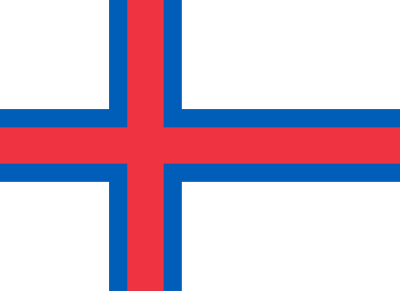
The Faroe Islands (or the Faroes) are an archipelago of 18 volcanic islands in the North Atlantic Ocean, between Iceland and Norway, which are an autonomous territory within the Kingdom of Denmark. The islands are known for its dramatic sea cliffs, rolling green hills, misty weather and powerful ocean views. Nature dominates life in the Faroes — feeling wild and intimate at the same time, where steep cliffs are occasionally packed with seabirds, the sheep population outnumbers the human population, narrow fjords cutting into the land, ever-changing light as clouds race overhead, and small, yet colourful villages, sometimes with many traditional houses have grass-covered roofs that blend into the landscape. Fishing and aquaculture are central to the Faroes economy and culture, and their music, language and folklore are strong markers of their local identity. Despite their isolation, the Faroe Islands are a modern, well-connected territory, whose people are deeply proud of their traditions.
Its capital, Tórshavn, is the smallest city in Europe, located on the island of Streymoy, and is home to around 20,000 people — roughly 40% of the Faroes' population. Meaning 'Thor’s Harbour' in Old Norse, Tórshavn is home to Tinganes, a peninsula of red wooden buildings with turf roofs that has been a political meeting place for its government for over one thousand years. It is one of the oldest parliamentary sites in the world. The city also combines cosy charm with urban life through its cafés, Nordic-style restaurants, lively music scene, museums and scenic harbour, all of which, within walking distance. With its windy and colourful appeal, surrounded by raw nature in every direction, Tórshavn feels more like a friendly town to tourists.
Extreme hurricane-force winds, frequent heavy rain, and rapid fog.
For traffic/driving violations;
While driving a rental, most fines will be charged through the rental company or issued on the spot by police. Other violations to keep in mind are:
The Faroe Islands have private land almost everywhere, so ignoring signs can cause problems. Entering certain hiking areas, protected islands or nature spots will require a fee — costing around 200kr – 520kr (~£23 – £60).
The official languages of the Faroe Islands are Faroese and Danish, but English is also spoken.
Vehicles drive on the right in the Faroe Islands, and headlights must be on at all times, even during the day. The minimum age to drive is 18, though you must be at least 21 to rent a car, along with a valid licence held for at least 1 - 2 years. Some rental companies would have higher age minimums — except SIXT whose minimum age is 20, and would often charged an additional daily fee and limit certain car categories to drivers under 25. UK drivers generally do not need an International Driving Permit (IDP) to drive in the Faroe Islands, unless they hold an older paper licence.
The roads in the Faroe Islands can be narrow, windy and steep on mountains, hills and cliffs, along with being gravel-pathed in small villages and single-laned with passing points in certain tunnels. Watch out for sheep on the road as they roam freely. If you hit one, you must inform the police about it. The islands are connected by bridges and subsea tunnels — making road travel easy between islands. However, some of these tunnels require a toll, which are usually charged as a fee by the rental company after your trip. Parking is usually free, but many towns (like Tórshavn, Klaksvík and Runavík), including the airport, require a parking disc showing arrival time, which have to be displayed in the front windscreen.
The two most common fuel types in the Faroe Islands are Bensin 95/Blýfrítt (unleaded petrol) and diesel. There are around 20 - 25 petrol stations in total across the country — many are owned by the brands Effo and Magn. You would normally find fuel stations in or near larger towns and main roads on the main islands. Stations can be scarce or non-existent in remote areas or on smaller islands, so it is best to top-up before long journeys, and refuel when your tank drops below half or one-third.
Many petrol stations are self-service, especially outside major towns, and are open 24/7 through automated pumps. However, the payment system may place a temporary pre-authorisation (around 800kr, for example) before charging the final amount later, and that contactless payment may not work. Make sure you have a card that has a PIN number, and cash as a backup. Also, be sure to refuel your rental before returning it to avoid fuelling charges from your rental company.
The legal limit is 0.05%.
Mandatory for all passengers.
Children under 12 years or under 135cm tall must use an approved, appropriate child restraint system, and be seated at the back. A child safety seat is mandatory for children under 4.