
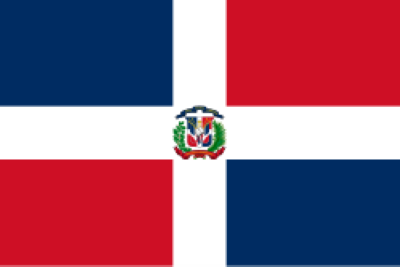
The Dominican Republic - not to be confused with Dominica - is a country in the Caribbean, located on the east side of the island of Hispaniola, which it shares with Haiti. The country is one of the most visited destinations in the Caribbean due to its warm weather and extensive coastline, and it is known for its tropical climate, beautiful beaches, mountainous interior, and a rich cultural heritage that blends Taíno, African, and Spanish influences.
Santo Domingo, located on the southern coast, is the capital and largest city of the Dominican Republic. Founded in 1496, it is the oldest continuously inhabited European settlement in the Americas. The city is considered the cultural, economic, and political heart of the country, home to the Zona Colonial, the first cathedral (Santa María la Menor), university (Universidad Santo Tomás de Aquino) and hospital (San Nicolás de Bari) in the Americas, lively music, street food, museums and a strong blend of old-world charm with modern city life.
Hurricanes, earthquakes, tsunamis, droughts and flooding.
Many fines are reportedly in the lower range, with some sources cite fines between RD$1,000 and RD$1,667 (~£12 - £20) for typical traffic infractions (illegal parking, not wearing seatbelt, phone use, running red lights, etc.), but more serious offences (e.g. driving without license) carry larger fines and/or additional consequences like vehicle seizure/impoundment.
Other violations to look out for are:
The official language of the Dominican Republic is Spanish, but English and French are also spoken.
Vehicles drive on the right-hand side of the road. The minimum age to drive in the Dominican Republic is 18, while the minimum age to rent a car is 21, though some rental companies have a higher minimum of 25. Drivers under 25 are typically subject to a "young driver" surcharge, and some companies may have stricter age requirements or restrictions on vehicle classes for younger drivers. UK drivers don't need an International Driving Permit (IDP) to drive for up to 3 months, unless it is required by the rental company, or carrying a paper licence.
Main highways are relatively good, but many secondary roads (especially in rural or remote areas) can be in poor condition, with potholes and large speed bumps. Avoid driving at night due to poor lighting and erratic drivers, expect to see many motorcycles/scooters on the road, along with horse-carts in some areas, keep in mind that the horn is used liberally (often as a signalling tool, not just as a reprimand), and drive defensively (local driving styles can be unpredictable, with aggressive overtaking, erratic behaviour, and poor signalling).
If you're planning to explore beyond major highways (to rural or remote areas), consider renting a higher-clearance vehicle (like a small SUV or 4x4) — helps with speed bumps, potholes, and rough roads. Always inspect the rental carefully (take photos/videos of damage), be aware of toll roads (mainly on major highways) and frequent traffic/police checkpoints (present documentation if asked to).
Petrol stations in the Dominican Republic typically sell octane (95 - 98 and 91), and diesel (Gasoil: Regular and Óptimo). There is no self-service LNG/CNG option for regular tourists, cash is accepted at all stations, but most major stations accept card, and some rural/remote areas may have very few gas stations (so, it’s wise to fill up when you can).
Be careful for scams: there have been reports of some attendants not resetting the meter to zero or fuelling less than you paid for. Say 'Resetéalo por favor' (Reset it, please) before they begin, watch the pump start at 0.00 and keep watching, and know the rough amount of litres your vehicle's tank holds.
In some residential or local areas, limits can be lower, with sources saying 30 km/h (~19 mph).
The limit is 0.05%, but zero-tolerance for professional drivers.
Mandatory for all occupants.
There is no law requiring child car seats in the Dominican Republic, but it is highly recommended for children under 8 to not ride in the front seat.
Check out more of our Country Guides: