
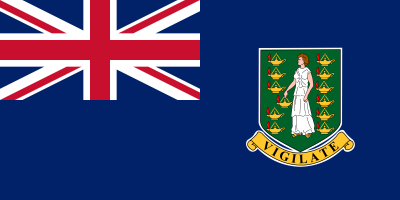
The British Virgin Islands (BVI), or known officially as the Virgin Islands, are a British Overseas Territory located in the northeastern Caribbean, east of Puerto Rico and the US Virgin Islands. The territory consists of about 60 islands and cays, with its main islands being Tortola, Virgin Gorda, Anegada and Jost Van Dyke. The BVI are known for their crystal-clear waters, coral reefs and sheltered anchorages, as well as being a world-renowned destination for sailing, yachting and beach tourism. The economy heavily relies on tourism and financial services, particularly offshore banking and company registration. Also, despite being a British Overseas Territory, the islands don't use the British Pound as their currency. Instead, they use the US dollar.
Its capital, Road Town, is situated on the island of Tortola. It serves as the administrative, commercial and cultural centre of the Virgin Islands, which features the main government buildings (e.g., House of Assembly and the Central Administration Complex), the central port, and key historical sites such as the Old Government House Museum. Road Town also functions as a hub for ferry services, cruising yachts, and trade, making it the primary gateway to the rest of the islands.
Hurricanes/tropical storms, heavy rain and coastal/flash flooding, along with earthquakes, potential tsunamis, and landslides.
For traffic and driving offences;
These fines may also come with court appearances or further penalties if drivers refuse to pay. For other violations to keep in mind;
The official language of the British Virgin Islands is English, but Virgin Islands Creole is also spoken.
Vehicles drive on the left side of the road like in the UK. The legal driving age is 18, but to rent, drivers have to be at least 25. Some rental companies would allow drivers aged 21 - 24 to rent, but with a daily 'Young Driver Surcharge' (around $15 – $50/~£11 – £37) and possible vehicle restrictions. UK drivers don't generally need an International Driving Permit (IDP) as long as they hold a valid UK photocard driving licence (not an older paper one). UK drivers can drive in the BVI with just their licence for up to 3 months, but some rental companies may ask for an IDP.
Roads can be narrow, steep and winding, with poor lighting and limited road signs. Potholes are a common issue, which can be exacerbated by heavy rain, and livestock and pedestrians may cross the road, especially at night. Also, reckless driving, speeding and night-time drag racing can occur, with some drivers don't yield to pedestrians, even at crosswalks. Use defensive driving, and best to avoid driving at night. Many visitors recommend renting a 4×4 vehicle, especially if you're planning to drive on steep/rural roads.
Most rental cars run on unleaded petrol, and some 4×4s may require diesel. You'll encounter both self and full service stations, where paying is done either at the pump or inside the shop, depending on the station. Major stations usually accept card, but some smaller or remote stations are cash-only or card readers may be offline — best to carry $20 – $50 in small bills as backup.
Stations are widely available on the main island, Tortola, but may be limited or non-existent on the other islands. Stations generally operate daytime hours (e.g., 7am – 7/9pm), with a very few running 24/7, and many closed on Sundays and Holidays. Best to plan ahead — don't let the tank go below half empty in rural areas, and fill up whenever the opportunity comes. Also, most rentals use a full–to–full fuel policy, so return the vehicle with a full tank or face a high fuel charge and a fee.
The BAC limit is 0.08%, but it's best practice to avoid drinking if driving.
Seatbelts are required for all occupants.
Children under 8 years or 145cm tall must use appropriate car/booster seats, with rear-facing recommended for the youngest (under 1 year/20 lbs).
Check out more of our Country Guides: