
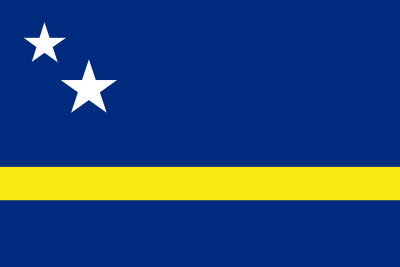
Officially dubbed as the Country of Curaçao, Curaçao is an island country in the southern Caribbean Sea, located just north of the coast of Venezuela. It is one of the constituent countries within the Kingdom of the Netherlands, alongside Aruba and Sint Maarten. The island is known for its colourful colonial architecture, beautiful beaches, coral reefs and crystal-clear waters, alongside: a tropical savanna climate, a multicultural society blended by African, Dutch, Latin American and Caribbean influences, brightly painted waterfront buildings, and the Blue Curaçao — a blue-coloured liqueur named after the island.
Its capital, Willemstad, is a historic port city of Curaçao — a UNESCO World Heritage Site due to its well-preserved Dutch colonial architecture, and it has long been an important trading centre in the Caribbean. The city is split into several districts, including: Punda — Willemstad's historic commercial centre, Otrobanda — known for its arts and local culture, Pietermaai — a trendy district with restaurants and nightlife, and Scharloo — famous for colourful mansions and street art. One of Willemstad's best-known landmarks is the floating Queen Emma Bridge, which connects Punda and Otrobanda across St. Anna Bay.
Extreme heat, prolonged drought, coastal/pluvial flooding, and sea-level rise.
For traffic/driving offences;
For other offences;
The official languages of Curaçao are Papiamentu, Dutch and English, but Spanish is also spoken.
Vehicles drive on the right in Curaçao, but right turns on a red light are prohibited. The minimum driving age is 18, while the minimum renting age is 21 or 23, depending on the rental company. Most rental providers require drivers to have held a valid licence for at least two years, along with applying a daily 'young driver' fee to under 25s, and restrict certain cars like SUVs from those who under 23 or 25. UK drivers don't legally need an International Driving Permit (IDP) if they hold a valid photocard licence, unless they have an older paper licence or the rental company requires one.
The island is relatively easy to explore by car, but some roads can be narrow or uneven, particularly away from Willemstad. In addition; road signs in Curaçao are largely based on Dutch/European conventions, and roundabouts and junctions can be more dangerous at night. If you are planning to visit remote beaches or dirt tracks, ask the rental company specifically whether those roads are allowed under your insurance.
The main two fuel types in stations for rentals are Mogas 95 (unleaded petrol) and LSD (low-sulphur diesel). Some stations have attendants who will fill the car for you, and would accept US dollars in cash along with Caribbean guilders. Credit cards aren't generally accepted at petrol stations, so make sure you hold a debit card, and small notes of cash as backup. Fuel prices are regulated and are generally equal across the island, but can change. The Curaçao government publishes current prices on a monthly notice. Stations are plentiful around Willemstad, but are less frequent everywhere else. Make sure to top-up before heading to more remote areas.
The legal limit is 0.05%. If you cause an accident while over the limit, your car rental insurance may become completely void.
Strictly mandatory for all occupants.
Children under 5 years must use an appropriate, approved child safety seat in the rear of the vehicle. Children under 12 are generally required to ride in the back seat.
Check out more of our Country Guides: