
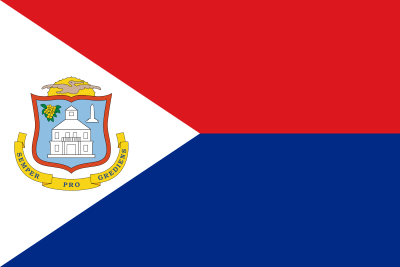
Sint Maarten — meaning 'Saint Martin' in Dutch — is a constituent country within the Kingdom of the Netherlands, located in the northeastern Caribbean Sea. It occupies the southern part of the island of Saint Martin, while the northern part belongs to France as the Collectivity of Saint Martin. Sint Maarten is one of the smallest landmasses in the world shared by two nations, famous for white-sand beaches and tropical climate, international tourism and nightlife, multicultural atmosphere, and the Princess Juliana International Airport — known worldwide for low-flying aircraft approaching the runway over Maho Beach. The island was claimed by both the Dutch and French in the 17th century. The division between the two sides was formalised in 1648 by the Treaty of Concordia. Sint Maarten became a separate country within the Kingdom of the Netherlands in 2010 after the dissolution of the Netherlands Antilles.
Its capital, Philipsburg, is the main commercial, government and administrative centre of Sint Maarten, situated on the southern coast between Great Bay and the Great Salt Pond. The town is home to the main port for Caribbean cruise ships — which brings many tourists to explore the country's beaches, jewellery stores and its local Caribbean culture, along with colourful waterfront and colonial-style buildings, duty-free shopping district and a popular boardwalk lined with restaurants, bars, and shops.
Hurricanes are the most significant threat, especially from June to November. Other hazards include coastal flooding, earthquakes, landslides and droughts.
For driving and traffic offences, tourists may have to pay separate costs if driving a rental; the official fine imposed by Sint Maarten authorities, and a possible administration/processing fee from the rental company. When stopped by police for an infraction (e.g., driving without a licence, speeding, not wearing a seat belt or using a handheld phone), officers will issue a transaction fine, where paying it will prevent the case from going before a criminal court judge. Payment must be processed through the Receiver's Office in Sint Maarten using the paperwork issued by the police.
Common driving and traffic offences include;
Sint Maarten enforces strict 'pay or stay' policies to tourists. If you try to leave the island without paying any fines, you will be flagged at border controls or be detained at a police station.
The official languages of Sint Maarten are English and Dutch.
Vehicles drive on the right side in Sint Maarten, where traffic coming from the right at intersections has priority unless signs say otherwise, and right turns on red lights are prohibited. the minimum age to drive is 18, while the renting age is 21 – 25 depending on the rental company. Drivers must have held a valid licence for at least 1 – 2 years, but those who are under 25 may be restricted from premium cars, and may have to pay a daily 'young driver surcharge' to rent. UK drivers don't strictly need an International Driving Permit (IDP) if they have a valid full UK photocard driving licence and a passport, unless the rental company asks for one.
Roads are mostly paved in Sint Maarten, but many are narrow, hilly and can have potholes or speed bumps. Compact cars are recommended to rent as streets and parking can be tight. Also, traffic can become heavy around Simpson Bay and Princess Juliana International Airport — especially when the bridge opens for boats, along with Philipsburg.
Public transport exists but is limited and not very convenient for beaches or evening dining. So, a rental car makes it much easier to visit places like Grand Case, Orient Bay, Maho and Mullet Bay. However, be sure to avoid leaving valuables visible in the car, and driving at night since lighting may be poorly.
The main fuel types available in Sint Maarten are unleaded petrol (commonly 95 RON, where 'essence' is another word for petrol), premium unleaded (98 RON), diesel and LPG (Liquefied Petroleum Gas). Many stations have attendants during daytime hours who would fill up for you, where as some become self-service at night. Cash is widely accepted, but many stations may not accepted card. Always have cash with you or confirm there is an ATM on site before you pull in. Prices are displayed in Caribbean guilder, not in US dollars, but fuel is often slightly cheaper on the French side.
Good fuel stations tourists commonly use are the ones near the airport and tourist zones in Cole Bay, Saunders and Middle Region. You can never be more than a few miles apart from one as they are distributed across the country, and some stations have convenience stores, but air pumps may not always work reliably. If you are exploring remote beaches, don't let the tank run too low. Make sure to refuel your rental before returning as most companies charge high refuelling fees. High fees can also occur if you return with a flat tyre.
The BAC limit is 0.05%.
Mandatory for all occupants.
Children under the age of 12 must travel in the back seat and are prohibited from sitting in the front, where as children under 4 must be secured in an approved, appropriately sized child safety seat.
Check out more of our Country Guides: