
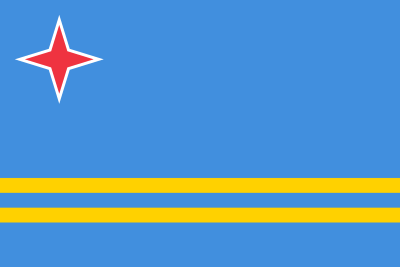
Officially the Country of Aruba, Aruba is a constituent island country within the Kingdom of the Netherlands in the southern Caribbean Sea, just north of Venezuela. The island is known for: white-sand beaches like Eagle Beach and Palm Beach, a warm, dry climate with sunshine year-round, a multilingual culture with a colourful Dutch-Caribbean architecture and vibrant nightlife, and a tourism-focused economy. Its capital, Oranjestad, situates on the southern coast of Aruba, and it serves as the island's political, cultural, and commercial centre. The city is famous for its pastel-coloured colonial-style buildings, shopping districts, cruise ship harbour, museums, waterfront promenades and historical landmarks like Fort Zoutman. Oranjestad plays a big role in Aruba's economy on tourism, as it attracts visitors around the world for its beaches, casinos, restaurants and water activities.
Rising sea levels, extreme heat, coastal erosion and drought.
For traffic and driving violations;
And for other violations;
Aruba's authorities are particularly serious about unpaid fines. If you attempt to leave the country without paying any fines, you would be stopped by airport border control and be prevented from continuing your journey until the fine is paid, which can result in missing your flight and incurring extra costs.
The official languages of Aruba are Papiamento and Dutch, but Spanish and English are also spoken.
Vehicles drive on the right-hand side in Aruba. The minimum age to drive is 18, but it's 21 – 25 to rent, depending on the rental company, where a daily 'underage' fee may be applied to those under 25. UK drivers need a 1949 Geneva Convention International Driving Permit (IDP) alongside their valid UK photocard licence to drive on the island. Make sure to purchase a valid IDP before you leave the county.
Roads in Aruba are generally paved and well-maintained for main roads and tourists areas, but are usually more rough and/or being dirt or gravel in the north and east coast, particularly around the less-developed areas and Arikok National Park. Also; you may encounter potholes and uneven surfaces outside the main routes, roads can become dangerously slippery after rain, some routes have unpaved surfaces, and driving on beaches and dunes are prohibited — some rough/off-road areas have restrictions as well, depending on the rental company. Make sure to reduce speed in wet conditions, stay on the main dirt roads in the North and East Coast areas, and rent a 4×4/Jeep if you intend to explore the rougher parts of the island.
Unleaded/premium gasoline (~95 octane) and ultra-low-sulphur diesel (ULS) are the most common fuel types for rentals in Aruba. Most Aruban petrol stations are attended where someone would fuel up for you, but others are self-service, where you must pay first before you pump. Major credit cards are accepted, and both US dollars and Aruban florins are widely used, though US$50 or US$100 bills may not be accepted due to worldwide counterfeiting.
Stations are more frequent in and nearby Oranjestad and San Nicolas, but are scarce in the northern area, around Pos Chiquito, and in remote/rough places. However, since Aruba is a small island, one tank should last throughout a typical holiday, depending on how long you're there and how much sightseeing you would be doing. But if you are heading into the more remote/rough areas, fill up before setting off just in case. Some rental companies operate a full-to-full policy or similar. So make sure to take a photo of the car's fuel gauge as evidence upon collection, and return the vehicle with the required fuel level to avoid any refuelling charges.
Some zones in urban areas, like near schools, have lower speed limits.
The BAC limit is 0.05%.
Mandatory for all vehicle occupants.
Children under 12 years or 150cm tall must use an approved child restraint system if they sit in the front passenger seat. For children meeting the same criteria sitting in the back, a restraint is required only if one is available in the vehicle. Otherwise, a standard seatbelt is allowed.
Check out more of our Country Guides: