
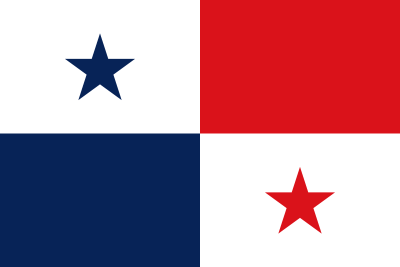
Officially known as the Republic of Panama, Panama is a country in Central America, bordered by Costa Rica to the west and Colombia to the southeast. It is best known for the Panama Canal; a crucial artificial waterway that connects the Atlantic and Pacific Oceans as an essential shipping route for global trading — a famous feat of human engineering. the country is also known for its tropical climate, with rainforests, mountains and long coastlines on both the Caribbean Sea and the Pacific Ocean, and a culture that blends Indigenous, Spanish, African, and modern international influences.
Its capital, Panama City (or Ciudad de Panamá in Spanish), lies on the Pacific coast near the entrance of the Panama Canal. It is the political, economic and cultural centre of the country, known for its modern skyline with skyscrapers and financial districts, historic quarters like Casco Viejo, and nearby natural areas, such as rainforests and the canal zone. The city is one of the most developed and cosmopolitan in Central America, serving as a hub for international banking, commerce and transportation.
Earthquakes, volcanoes, coastal tsunamis, wildfires and localised heatwaves.
For traffic/driving offences, fines are issued on the spot, and are received via a paper ticket or registered electronically. Fines must be paid within 30 days (or sooner for some offences). Late payments or not paying can lead to additional penalties such as more fines, legal trouble, prevented to leave the country (for tourists) and issues with renting a vehicle again.
Common offences include (in USD):
Fines can increase for serious or repeated offences, and may include licence suspension or vehicle impoundment.
Panama has a driving-point system where offences can reduced points. If the amount reaches or exceeds zero, your licence will suspended or revoked. Fortunately, the point system doesn't affect foreign licence holders, though fines, vehicle impoundment and temporary driving bans can still be applied. Also, be careful for corrupted officers who would try to do unofficial on-the-spot payments or would ask for bribes. Always request an official ticket and to pay through official channels (government offices, banks or online systems).
The official language of Panama is Spanish, but Guaymí (Ngäbere), Buglere, Emberá, Wounaan, Guna, Teribe and Bribri are also spoken.
Driving in Panama is done on the right-hand side. The minimum age to drive is 18 (16 with parental approval), but to rent, you must be at least 21 years old (23 or 25 for most companies), with a valid licence held for at least 1 - 2 years. Drivers under 25 may have to pay a daily 'young driver' surcharge. UK drivers generally don't need an International Driving Permit (IDP) to drive in Panama for up to 3 months with a photocard licence, but some rental companies may request one.
Roads in Panama are generally decent, especially near Panama City, but the driving style of many drivers can aggressive or unpredictable, with sudden speed limit changes. Expect traffic in Panama City, avoid driving at night in rural areas, and use navigation apps to help. police checkpoints are common in Panama, so be ready to show your licence, passport and insurance in a polite and cooperative manner. An International Driving Permit (IDP) isn't required, but it can help with translation.
Petrol stations in Panama typically offer Gasolina 91 (Regular petrol), Gasolina 95 (Premium petrol) and diesel. Almost very station is full-service, but make sure the attendant selects the correct fuel, the pump is reset to zero before fuelling, and do not get distracted while paying as attendants may trick you to pay twice. Card is accepted at most stations, but usually not in smaller or rural stations. It is best to always carry cash as backup.
Fuel stations are easy to find in cities and along highways, but are scarce in remote places, with limited opening times. If travelling to rural locations, fill up before departing and whenever your tank drops below half. Also, most rental companies operate on a 'full-to-full' policy where you must return the vehicle with a full tank. Keep receipts as they may help.
Zero-tolerance (0.00%).
Required for all occupants.
Children 4 or under must travel in the back with a child safety seat. Under 2s should use a rear-facing safety seat.