
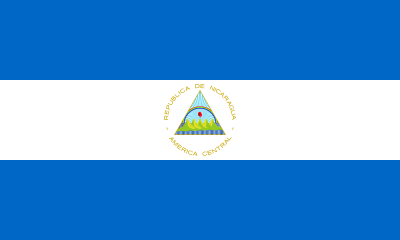
Nicaragua, or known as the Republic of Nicaragua, is a country in Central America, bordered by Honduras to the north and Costa Rica to the south, with coastlines on both the Pacific Ocean and the Caribbean Sea. It is known for its dramatic landscapes, featuring large lakes like Lake Nicaragua, active volcanoes, tropical forests and colonial cities. The country has a tropical climate, with a culture that blends Spanish and Indigenous influences, and an economy built on agriculture (coffee, bananas and tobacco), tourism and manufacturing.
Its capital, Managua, is the largest city and the political, economic and cultural centre of Nicaragua. Located on southwestern shore of Lake Managua, it is a metropolitan area, shaped by natural disasters, especially the 1972 Managua earthquake, which destroyed much of the old city centre. It now possesses a modern layout that's more spread out than many capitals, with a mix of modern buildings and older neighbourhoods, along with famous landmarks like the Old Cathedral ruins, New Cathedral, the National Palace of Culture, government buildings and lakeside promenades like Paseo Xolotlán.
Destructive earthquakes, threat of volcanic eruption, and landslides.
For driving/traffic offences, police may confiscate your licence until the fine is paid. Common offences include:
In addition, Overstaying your visa can result in fines around C$110 (~£2) per day, plus a ~C$370 (~£8) exit processing fee. Standard tourist stays last for up to 90 days, and to extend your stay, you must pay a ~C$920 (~£19) fee per 30-day extension.
The official language of Nicaragua is Spanish, but English, Miskito, Rama, Sumo, Moskitian Creole, Garifuna and Rama Cay Creole are also spoken.
Vehicles drive on the right in Nicaragua. The minimum driving age is 18 years, but to rent is 21 – 25, depending on the rental company. Some companies would apply a 'young driver' surcharge to drivers under 25. UK drivers are often required to have an International Driving Permit (IDP), in addition to their full driving licence, when driving in Nicaragua. This is mainly for police checks and if rental companies require one. If, by any chance, you are entering Nicaragua with a vehicle of your own, you'll need a Temporary Import Permit (TIP) — often issued for 30 days initially.
Driving in Nicaragua can be challenging: roads are often in poor condition with potholes, unpaved sections and very little lighting, especially outside cities, animals would occasionally appear on roads, vehicles of other drivers may be in poor condition, and drivers can be aggressive or unpredictable. It is recommended to avoid driving at night as possible, drive defensively at all times, and plan routes carefully in rural areas. Other things to keep in mind; you cannot register a vehicle as a tourist, right-hand-drive vehicles (for driving on the left) are not allowed, and be careful of corrupted police who target tourists for fines — make sure to have your documents ready, do not carry large amounts of cash, and ask for a written ticket. Remember: only traffic officers can fine you. You can challenge when other officers try to fine you.
The most common fuel types in Nicaragua are regular (Gasolina Regular), premium (Gasolina Súper) and diesel (Diésel). Fuel stations are normally full-service, with self-service being extremely rare, but make sure the pump is reset to zero before the attendant starts fuelling, and ask for a receipt if you need proof for rental or expenses. Card is accepted in cities, but not guaranteed in rural areas. It is best to have cash with you, but not a large amount. In addition, US dollars are often accepted at major stations.
Stations are common in cities and on major highways, but sparse in rural/remote areas. Make sure you top-up before travelling to rural areas, and whenever the opportunity arises, especially when your tank hits halfway. Also, check your rental agreement as some may require you to return the car with a full tank.
The BAC limit is 0.05%.
Mandatory for all occupants.
Children under 12 years are prohibited from riding in the front passenger seat and must sit in the rear. Children under 4 must be secured to an age-appropriate child safety restraint system, although enforcement can be inconsistent.
Check out more of our Country Guides: