
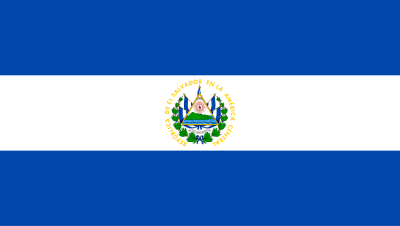
The Republic of El Salvador, or simply El Salvador, is the smallest and most densely populated country in Central America. It lies along the Pacific Ocean, bordered by Guatemala to the west and Honduras to the north and east. Known as the 'Land of Volcanoes', El Salvador has over 20 volcanoes — some of which are active, along with mountains, coastal plains, fertile valleys and a tropical climate with distinct wet (May – Oct) and dry (Nov – Apr) seasons. Its culture blends Indigenous traditions with Spanish influences from its history as part of the Spanish Empire before independence in 1821, and its economy is based on agriculture (especially coffee) along with manufacturing, services, and remittances from Salvadorans living abroad.
Its capital, San Salvador, is the largest city in El Salvador, and the political, cultural and economic heart of the country. Situated in a valley surrounded by volcanoes, including the prominent San Salvador Volcano, the city is part of the metropolitan area AMSS (Área Metropolitana de San Salvador), where it is home to major universities and museums, government institutions and national headquarters, and historic landmarks such as the Metropolitan Cathedral.
High-intensity earthquakes, volcanic eruptions, tropical storms, severe flooding and landslides.
For driving/traffic violations, fines are normally issued by officers with a ticket, which are paid at banks or official payment centres, or be charged to your card if drove a rental, even after leaving the country — fines can get reduced by at most 50% if paid within a few days. If a officer asks you to pay directly, it is most likely a scam — so don't get yourself pressured to pay.
Common driving/traffic offences include:
Other violations to keep in mind;
The official language of El Salvador is Spanish, but Nawat and English are also spoken.
Vehicles in El Salvador drive on the right side of the road. The minimum age to drive is 18, while the minimum renting age is generally 21, often with a age limit of 75, a requirement to have held a valid licence for at least one year, and a surcharge to drivers under 25. UK drivers should obtain an International Driving Permit (IDP) to drive in El Salvador to to avoid issues with local authorities — where checkpoints are frequent — and to rent a vehicle.
The road quality on main highways are generally good, but can be rough and sometimes unpaved and poorly lit in rural roads. So using a SUV or 4x4 is recommended if driving in beach, volcanic and rural areas. Common hazards on roads include potholes, missing manhole covers, speed bumps with little warning, and animals crossing on rural roads. However, be careful around other drivers since some drivers can be aggressive and unpredictable, with poor lane discipline. It is recommended to avoid night driving, use private parking or guarded areas, never leave valuables in your car, and to be cautious near borders — especially Guatemala crossings.
Fuel stations in El Salvador typically sell regular and premium gasoline, and diesel. Card is widely accepted, but small stations, especially in rural places, may prefer cash. Most stations offer tyre pressure checks, windshield cleaning and small shops/toilets, and are full-service, but make sure you check that the pump has been reset to zero, the correct fuel type is used and the price matches to what you're charged. Stations are widely available across the country, especially near cities and main highways, but are scarce in rural areas. Fill up before long drives and whenever possible, and be sure to use well-lit, busy stations at night if you can.
Zero-tolerance (0.00%).
Mandatory for all passengers.
Children under 5 must be secured in an appropriate car seat. Children under 12 are prohibited from sitting in the front passenger seat.