
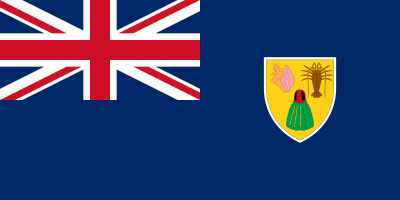
The Turks and Caicos Islands are a British Overseas Territory located in the Atlantic Ocean, southeast of the Bahamas and north of the Dominican Republic. Consisting of two groups of tropical islands in the Lucayan Archipelago, the territory was once part of the short-lived West Indies Federation — a group of former British Imperial territories that attempted to become one single state, independent from Britain, before its collapse in 1962. The islands are known for white sandy beaches and clear turquoise waters, extensive coral reefs — making them a popular destination for snorkelling and scuba diving, a warm tropical climate with sunshine throughout much of the year, and a relatively small population with a variety of cultural backgrounds. Its economy relies on tourism, financial services and fishing.
Its capital, Cockburn Town, is located on the island of Grand Turk. It serves as the territory's administrative and governmental centre, and it's known for its colonial-era architecture, quiet streets, historical landmarks, and proximity to beaches and coral reefs. Despite being the capital, Cockburn Town isn't a large location compared to Providenciales; the main commercial and tourism hub on the islands.
Tropical cyclones, hurricanes, coastal and inland flooding from heavy rainfall, and the long-term impacts of climate change.
For traffic/driving violations;
Other violations to keep in mind;
The official language of the Turks and Caicos Islands is English, but Turks and Caicos Creole, Haitian Creole and Spanish are also spoken.
Vehicles drive on the left side of the road. However, many rentals are left-hand drive since they are imported from the US, and automatics are widely available. The minimum driving age is 18, but you must be 25 or older to rent a car due to local insurance rules. A few rental companies may allow drivers aged 21 – 24 to rent, but at the cost of a daily fee or higher deposit. UK drivers can use their valid UK photocard licence to drive in the islands for up to a month without an International Driving Permit (IDP), but one is needed if you hold an older paper licence or the rental company requires one. A rental is generally the best way to explore Providenciales — one of the northwest Caicos islands — since there is no conventional public-bus system and attractions are spread around the island.
Roads are generally good, especially on Providenciales, but secondary/unpaved roads can be rough. So, a 4×4 is usually recommended to travel to emote beaches or areas such as West Harbour Bluff. Parking is usually free and there are no toll roads, but there are no traffic lights, and roundabouts are common, but can be dangerous, particularly at night. Watch out for potholes, un-signposted speed bumps and wandering livestock (such as donkeys, goats, horses or cows), especially outside major areas. Night-driving can be especially dangerous with street lighting being limited outside the main areas. It is highly recommended due to increasing number of accidents that you: take it slowly when you first leave the airport with the rental, don't assume other drivers will follow the rules, and photograph the rental car thoroughly before accepting it.
Petrol is widely available in stations across the islands. Diesel is also available. Stations are generally full-service, but card payments vary between smaller/independent stations, with some may having minimum card transactions. Therefore, it is best to carry cash as backup. Providenciales has several stations around the island, including stations on/near Leeward Highway and Airport Road, but there are fewer stations on the other islands. If you're taking a rental vehicle to a less-developed island, fill up beforehand and don't let the tank get close to empty. Some rental companies may have a full-to-full policy, so don't leave it until you're at the airport.
The legal limit is 0.08%.
Mandatory for all drivers and passengers.
The Turks and Caicos Islands are much less regulated and lack strict enforcement on child car seats. However, it is heavily advised to bring your own child seat or request one from your rental company. Major rentals on Providenciales offer child seats to rent, but availability is very limited on smaller outer islands.
There doesn't seem to be an requirement for rental cars to carry items like a warning triangle, first-aid kit or a spare tyre plus wheel-changing tools.
Check out more of our Country Guides: