
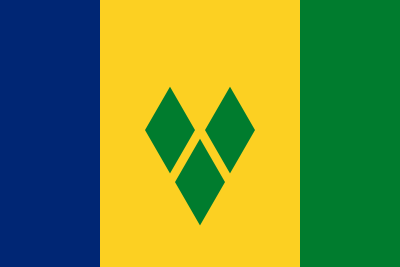
Saint Vincent and the Grenadines, or known simply as Saint Vincent or SVG, is an archipelagic country in the eastern Caribbean Sea, part of the Lesser Antilles island chain. It consists of the main island, Saint Vincent, and a group of smaller islands known as the Grenadines — that includes: Bequia, Mustique, Canouan, Union Island, Petit St Vincent, Palm Island and Mayreau. The country is known for its volcanic mountains — like the active volcano La Soufrière, beautiful beaches and coral reefs, sailing and yachting in the Grenadines, and an economy reliant on tourism, agriculture (especially bananas), fishing and offshore services.
Its capital, Kingstown, is the main port and commercial centre of St. Vincent. Located on the southwest coast of the main island, Kingstown is sometimes referred to as the 'City of Arches' because of its many stone archways, and it is known for its colonial-style architecture and busy harbour, along with the St. Vincent Botanical Gardens — one of the oldest botanical gardens in the Western Hemisphere, markets, churches — like the Kingstown Anglican Church, and government buildings such as the Financial Complex and the House of Assembly.
Climate change, volcanic activity, hurricanes and landslides.
For traffic and driving offences, the most common offences in Saint Vincent are:
For other violations;
The official language of Saint Vincent is English, but Vincentian Creole is also spoken.
Vehicles drive on the left-hand side of the road. The minimum age to drive is 17, to rent is usually 21, though drivers under 25 are frequently subject to a 'young driver surcharge', and restricted from premium vehicles. Though UK photocard licences are recognised, UK drivers must obtain a local Temporary Driver’s Licence to legally drive in St. Vincent — which would cost around EC$125 (~£35). These can be obtained at the rental company or the Traffic Department, but you must present your valid licence along with a 1949 International Driving Permit (IDP).
Roads can be narrow, steep and winding, in addition to having poor lighting at night, limited signage, stray animals roaming, and several potholes and speed bumps. Renting a car is good for exploring the main island, travelling to waterfall hiking and volcanic areas, beaches, inland villages or comfortable driving narrow mountain roads, but not for night-driving and if you're staying in the Grenadines. Be advised to expect aggressive overtaking and sudden stops on the road, along with to use your horn on blind corners — a common local practice, and to obtain downloaded or physical maps before travelling inland.
The most common fuel types available in Saint Vincentian stations are unleaded petrol and diesel. Most fuel stations are full-service, where an attendant would top up your vehicle for you. Cash and card are widely accepted, but keep in mind that some rural stations might not accept cards, so carry cash when driving in remote areas just in case.
There are several stations on the main island — concentrated around Kingstown, Arnos Vale and the main coastal highways, and are typically open 6:30/7am to 6/9pm. However, stations on the Grenadine islands and in rural parts of Saint Vincent island are more limited with shorter opening hours — and would close during lunch and earlier on Sundays — and occasional shortages. So if you are planning on driving to remote areas or to other islands via ferry transfer, make sure you fill up beforehand, refill when the tank hits halfway, and avoid waiting until evening to top up.
Due to hilly terrain, frequent blind corners and narrow, winding roads, it is heavily advised to drive much slower than the posted limit depending on visibility.
The legal BAC limit is 0.08%.
Mandatory for all occupants.
Children under 12 years or under 135cm tall are prohibited from sitting in the front passenger seat, and must be secured in an age-appropriate child restraint system at the back.
Check out more of our Country Guides: