
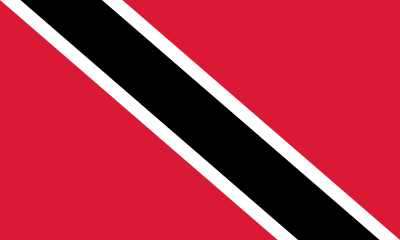
Known as the Republic of Trinidad and Tobago, Trinidad and Tobago is an archipelagic country in the southern Caribbean, located just off the northeastern coast of Venezuela. The country mainly consists of the twin islands: Trinidad and Tobago, alongside smaller islands like Little Tobago, Chacachacare and Monos Island, and it is known for its rich multicultural heritage (blending African, Indian, European, Chinese and Middle Eastern influences), along with Carnival (one of the world’s largest and most colourful festivals), musical styles such as calypso, soca and steelpan music, diverse cuisine including doubles, roti and callaloo, tropical forests, coral reefs and abundant wildlife. Trinidad is the larger of the main two islands, and more industrialised, while Tobago is smaller, quieter and known for beaches and ecotourism.
Its capital, Port of Spain, serves as the political and business centre of the country. Located on the Gulf of Paria, on the northwest coast of the island of Trinidad, the city is known for colonial-era architecture, modern office buildings, hosting major Carnival celebrations, busy markets, nightlife and cultural venues, and landmarks like the Queen's Park Savannah and the Magnificent Seven historic mansions.
Flooding, earthquakes, landslides and tropical storms.
Trinidad and Tobago has a fixed-penalty traffic ticket system, along with a demerit-points system. Each driver begins with zero points on their driving permit record, and points would be added upon committing major driving offences like Driving Under the Influence, driving while disqualified and careless driving. Accumulating 10 points or more within a three-year period will lead to licence suspension for 6 months, while 14 – 20 points leads to a one-year suspension, and over 20 points; a 2-year suspension. However, new drivers who have held their licence for at most 12 months will be suspended if accumulated 7 points or more. These points can be automatically expunged after two consecutive years of good driving behaviour.
Common traffic/driving offences include:
If a ticket is left unpaid within 30 days and not contested in court, it can lead to an increased fine by 25%, which can escalates further the longer the delay, with the addition of imprisonment, driving permit suspension and/or blocking of vehicle transactions.
Other violations to keep in mind;
The official language of Trinidad and Tobago is English, but Trinidad and Tobago creole, and Spanish are also spoken.
Vehicles drive on the left side in Trinidad and Tobago. The minimum age to drive is 17, but you have to be at least 25 to rent a car, along with a valid driving licence that has been held for a minimum of two years. Some rental companies may allow drivers as young as 21 – 23 to rent, but they are often require to have held their licence for 1 – 3 years, and to pay a daily 'underage driver surcharge'. Before you drive away with a rental, make sure to check its tyres, confirm the insurance coverage and fuel grade, ask whether warning triangles, safety vests and a spare tyre are included, and photograph existing scratches or dents. UK drivers don't generally need an International Driving Permit (IDP) to drive in the country unless they hold an older paper licence, they're staying longer than 90 days, or the rental company requires one.
Roads range from modern highways in Trinidad to narrower rural and mountain roads in Tobago. Heavy traffic can occur around Port of Spain and central Trinidad, while highway traffic can be fast-moving. Be careful while driving on rural roads as unexpected hazards may occur like potholes, animals, pedestrians and uneven surfaces, along with being likely poorly signposted or lit. It is advised to drive defensively, avoid night-driving — especially in isolated areas, lock doors when driving in urban traffic, and keeping valuables out of sight in vehicles.
Most fuel stations in Trinidad and Tobago offer Super/RON 92 (standard unleaded petrol), Premium/RON 95 and diesel, while some also offer CNG (compressed natural gas). Many of these stations have attendants that fuels up for you, and larger stations would come with convenience stores, ATMs, cafes, tyre air pumps or car wash facilities. Payment can be done via cash or card, and contactless is becoming common at larger stations.
Fuel stations are common in cities and on main roads, but are sparse in rural parts of Tobago and Trinidad. If you are planning to go on long drives, especially in Tobago, fill up before departure and when the opportunity arises, don't let the tank run too low, and carry some cash in case card payment is unavailable.
The legal limit is 0.08%. The Trinidad and Tobago Police Service (TTPS) conducts random breathalyser testing at checkpoints across both islands, particularly during holiday seasons and periods like Carnival.
Mandatory for all occupants.
Children 5 years or under must ride in the back seat, using an appropriate child restraint. Children under 12 generally cannot travel in the front unless it is specifically permitted by a rear-facing restraint. Be mindful of Trinidad and Tobago's Windscreen and Window Tint Regulations when using a child seat. If your child is 5 years or less, you are legally permitted to use the back window visor, but only while the child is seated in the vehicle. You must remove the visor from your window when the child is not present in the car seat.