
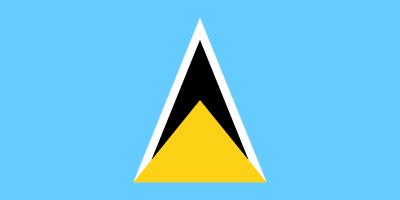
Saint Lucia is a small island country in the eastern Caribbean Sea, part of the Lesser Antilles. Once was an associated state of the United Kingdom after a long power struggle between England and France, the island gained independence in 1979, and it is known for its lush rainforests, volcanic and golden beaches (like Reduit Beach), sulphur springs, the twin volcanic peaks called the Pitons, rainforest hiking and waterfalls, and having a mix of African, French and British cultural influences, reflected in its language, food, music and traditions.
Its capital, Castries, serves as the political, economic and cultural centre of St. Lucia. Situated on the northwest coast of the island, the city was originally founded by the French in 1650, and later developed under British rule, giving it a blend of colonial history and Caribbean culture. Castries is home to a busy Caribbean port and cruise ship destination, alongside the vibrant Castries Market — where visitors buy spices, crafts and local produce, and government buildings such as the Government House.
Hurricanes, floods, landslides and volcanic activity.
For traffic and driving offences, fixed penalties are set out for main traffic offences. But if proceeded to court, the result can lead to higher fines, and/or imprisonment. These violations include:
Serious offences like dangerous driving, Driving Under the Influence (DUI) and leaving the scene of an accident carry fines up to thousands — EC$10,000 (~£2,765) highest, alongside imprisonment and possible licence suspension/confiscation.
Other offences to keep in mind are:
The official language of St. Lucia is English, but Saint Lucian French Creole is also spoken.
Vehicles drive on the left-hand side in St. Lucia. The minimum age to drive is 18, but to rent, the age generally ranges from 21 to 25, depending on the rental company. Also, Drivers must typically have held a valid driving licence for at least 1 – 2 years, and those over 65 may need to provide a medical certificate from their doctor indicating they are fit to operate a vehicle. UK drivers don't really need an International Driving Permit (IDP), unless they hold an older paper licence. However, a temporary local driving permit is required, which usually costs around EC$54 (~£15).
Roads on the island, especially on mountainous terrain, can be narrow, steep and winding, along with having potholes, sharp blind turns, animals on roads, and drivers who would overtake aggressively or horn frequently around corners. Renting a car is only worthwhile if you want flexibility, want to explore beaches, waterfalls and Soufrière, and are confident of driving on mountainous roads. If you are, make sure to avoid night-driving, download offline Google Maps or equivalent, use lower gears on steep descents, drive defensively and allow locals to pass, and keep valuables out of sight when parking.
Fuel stations in Saint Lucia have unleaded octane (regular and premium) and diesel. Most stations are full-service, and most in tourist-centred areas accept card (Visa and Mastercard) and cash — often in US dollars too. However, smaller rural stations may be cash-only. Most rental companies either require drivers to return the vehicle with a full tank, or offer prepaid fuel options.
Stations are common in populated areas like Castries, Rodney Bay and Soufrière, but are sparse in rural and mountain regions. Many stations operate around 7am to 6/8pm with limited Sunday hours, but some stations in Castries and tourist areas run 24/7. If travelling to rural or mountainous areas, make sure to fuel up early and when your tank reaches halfway, and not to let the tank run too low. Also, keep in mind that due to the island's mountainous terrain (e.g., steep climbs), fuel consumption is higher than many tourists expect.
The BAC limit is 0.08%, but due to the island's road conditions, it is highly it is highly recommended to avoid drinking and driving entirely.
All drivers and passengers are legally mandated to wear seat belts while driving.
Children under 7 years old must use an appropriate child seat.
Check out more of our Country Guides: