
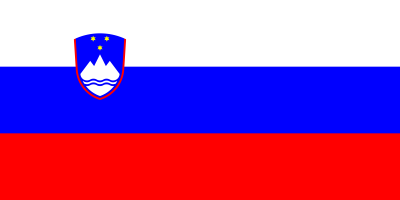
Known as the Republic of Slovenia, Slovenia is a country in Central Europe, bordered by Italy, Austria, Hungary and Croatia. Once was part of the country of Yugoslavia until 1991, it is a safe and environmentally friendly country with a developed and export-oriented economy, and a strong education system. Slovenia is known for its natural beauty, cultural diversity and high quality of life, including a very diverse landscape — despite its modest size — with Alpine mountains, forests (which covers over half of the country), lakes such as Lake Bled, karst caves like Postojna, and a short but scenic Adriatic coastline.
Its capital, Ljubljana, is Slovenia's largest city. Built around the Ljubljanica River, it is a compact, green and lively city, famous for its charming old town, pedestrian-friendly centre, numerous bridges — most notably the Triple Bridge and Dragon Bridge, with the dragon being the symbol of the city, and Ljubljana Castle, which offers panoramic views of the city and reflects its long history, dating back to Roman times. Ljubljana is also a vibrant cultural and university city, known for festivals, museums, cafés and a relaxed atmosphere. It was named the European Green Capital in 2016 by its commitment to sustainability.
Floods, landslides and avalanches, especially in mountainous and hilly regions. Droughts, heatwaves, storms and forest fires are also common, and earthquakes pose a high-impact risk, particularly in the west and central/southeastern areas.
For traffic and driving offences;
Slovenia’s traffic system uses penalty points for many violations. Accumulating too many points (e.g., 18) can lead to licence cancellation. For foreign licence holders, points might still affect your ability to drive in Slovenia if you exceed limits while there. Payment is usually on-the-spot, with a chance of the amount being reduced if the fine is paid immediately or within a short period. If you get a traffic fine while driving a rental car, the rental company will usually forward the notice to you — sometimes adding an admin fee.
For other violations;
The official language of Slovenia is Slovene, but Italian, Hungarian, English and German are also spoken.
In Slovenia, vehicles drive on the right-hand side. The minimum age to drive is 18, while rental companies typically require drivers to be at least 21 with a valid licence that has been held for at least 1 – 2 years. Companies would even charge extra fees to drivers under 25, even over 70 - 75. UK drivers don't generally need an International Driving Permit (IDP) to drive in Slovenia. However, if you hold an older paper licence or a licence from the Channel Islands/Isle of Man, you're staying in Slovenia for more than 30 days, or the rental company you're using requires an IDP, then one is needed.
Roads are usually well-maintained, especially motorways and expressways, but secondary/rural roads and mountain passes can be narrow, steep, and twisty, with sharp bends and cobblestone/less grippy surfaces that can worsen in wet, foggy or icy conditions. Dipped headlights are mandatory to be on 24/7, even in good weather, and winter tyres or snow chains must be used during the winter season (15 Nov – 15 Mar). Some mountain passes are closed in winter for safety, so always check local updates before setting out. In addition, allow extra time while on mountain or rural roads since narrow, historic or scenic stretches often reduce average speeds.
City parking is often metered, so check signs and zones. Don’t park where prohibited, or risk fines and towing, and stay alert since most Slovenian drivers behave more assertive than in some countries. Vehicles up to 3.5 tonnes must have a valid e-vignette (electronic toll pass) to use motorways and expressways in Slovenia. E-vignettes can be bought through the official site (evinjeta.dars.si), in fuel stations near the border, post offices and service centres, which you can get a weekly, monthly or annual pass. Rental cars normally include an e-vignette, but do check before driving off.
Unleaded 95 (Super 95/Eurosuper 95) is the most common fuel in Slovenia, where Unleaded 98 or 100 (Super Plus) and Euro Diesel (standard and premium) are widely available, but LPG/Avtoplin is only available in some stations. EV chargers are increasingly available in towns, cities, shopping centres and motorway service areas. Most stations are self-service, with larger ones often having convivence stores, cafés or restaurants (at major motorway stops). Most stations accept card, and have pay-at-pump machines. Cash is usually accepted, but card is most convenient.
Service stations are frequent in Slovenia — roughly every 30 km on motorways and plentiful in cities and towns, and most stations operate 24/7 along major routes and at motorway service areas, while smaller town stations may have limited hours (e.g., until 8pm). Keep an eye on your tank level in rural areas or the Alps. While stations in these areas are still common, it’s wise not to run very low before a long stretch of road. Also, stations on motorways tend to have higher prices than those in towns or just off exits. Filling up before joining the motorway can save you a few cents per litre, especially on a large tank.
Lower limits may apply in some zones; always follow road signs.
The legal limit is 0.05%, but 0.00% (zero-tolerance) for novice drivers (less than 2 years' experience or under 21) and all professional drivers.
Seat belts must be worn by all passengers on seats with belts.
Children under 150cm must use an appropriate child restraint or size-adapted seatbelt. Children under 3 must have a car seat, while children 3 or older can use a booster if no seat fits, but must sit in the back. Also, rear-facing seats on the front passenger seat must have the airbag deactivated.
Check out more of our Country Guides: