
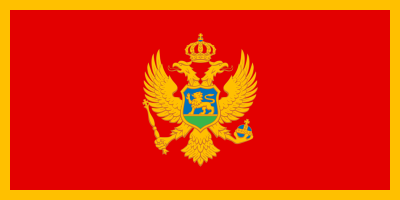
Montenegro — or its native name, Crna Gora (meaning 'Black Mountain') — is a small but striking country in Southeast Europe, on the Balkan Peninsula, bordered by Croatia, Bosnia and Herzegovina, Serbia, Kosovo and Albania, along with the Adriatic Sea. Despite its size, it packs in dramatic contrasts: turquoise coastline and medieval towns along the sea, rugged mountains and deep canyons inland, and peaceful lakes and forests in between. The native name 'Crna Gora' comes from the dark, forested mountains that impressed early visitors. The country has been shaped by Slavic roots, Byzantine and Venetian influence, and centuries of resistance to Ottoman rule, and it's known today for its its natural beauty, Orthodox monasteries and a relaxed Mediterranean-meets-Balkan vibe. Tourism is a major part of the economy, especially around the coast and national parks.
Its capital, Podgorica, is also Montenegro’s largest city. Situated north of Lake Skadar, south of the country, Podgorica serves as the country’s political, economic and cultural hub, even though Cetinje — its former capital — serves as Montenegro’s historic royal capital and cultural heart. Unlike Montenegro’s medieval coastal towns, Podgorica has a more modern and understated look, largely due to it being heavily rebuilt after World War II. The city blends contemporary architecture with Ottoman-era remnants, leafy riverbanks, cafés and nearby vineyards. While not flashy, it’s lively and central—most roads, institutions and businesses run through it.
Flooding, earthquakes, droughts and wildfires.
For traffic and driving offences;
If you are stopped by police, the officer may not only explain the violation you committed, they may temporarily take your licence or documents in order you to pay the fine at a bank, post office, or on-the-spot by card. Afterwards, the documents are then returned. Foreign drivers are sometimes asked to pay the fine immediately to avoid leaving the country without paying.
The official language of Montenegro is Montenegrin, but Albanian, Bosnian, Croatian and Serbian are also spoken.
In Montenegro, vehicles drive on the right and overtake on the left, and headlights must be on at all times, including in the daytime. The minimum driving age is 18 years, while the minimum renting age is 21 — sometimes, 22. Rental companies would also require drives to have held a valid licence for at least 2 years, and may apply a 'young driver' fee (€10 - €30) to drivers under 25. UK drivers don't need an International Driving Permit (IDP) to drive in Montenegro for visits up to 90 days if they hold a valid photocard driving licence. If they hold a paper licence, then an IDP is required. In addition, if you're planning to drive a rental out of the country, inform the rental company to obtain the necessary insurance.
Driving in Montenegro is generally safe and a good way to explore the coast and mountains. However, roads can be narrow and winding on mountains, and conditions can become worse during winter periods (15 Nov – 1 Apr). therefore, it is mandatory to use winter tyres during those periods. Speed cameras and police checks are common in Montenegro, so be sure to the follow the rules on the roads, and to have all necessary vehicle documentation.
The most common fuel types in Montenegro are Euro Super 95 (petrol/unleaded), Euro Super 98 (premium petrol), Euro Diesel and LPG (in some stations). Cash is always accepted, with card widely accepted in bigger stations, but card may not work in small rural stations, so carry cash when travelling to remote areas. Most fuel stations are self-service, while others have attendants that will fill-up for you, but make sure the pump resets to zero before filling, and always check the fuel amount on the pump display before paying.
Fuel stations are easy to find on coastal roads and main highways — usually every 20 – 70 km apart from each other, while stations in mountain areas are 40 – 60 km apart. Also, most stations are open 24/7. But make sure to top-up before going into mountain regions like Durmitor. Fuel consumption may be higher on steep mountain roads.
The BAC limit is 0.03%.
Mandatory for all occupants.
Children under 5 years must use an appropriate restraint or child seat. Children under 12 cannot travel in the front passenger seat, and children under 135cm tall should use a booster seat, regardless of age.
Check out more of our Country Guides: