
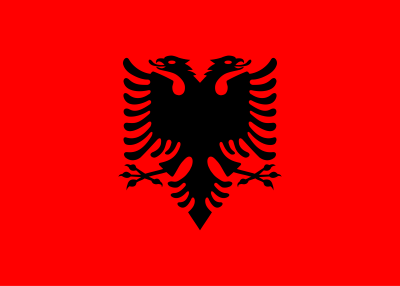
Officially dubbed as the Republic of Albania, Albania is a small but striking country on the Balkan Peninsula in Southeast Europe, bordered by Montenegro, Kosovo, North Macedonia and Greece, alongside the Adriatic and Ionian Seas. The country is a parliamentary republic with a growing tourism scene, famous for its warm hospitality, traditional music and hearty food like byrek and tavë kosi, along with dramatic mountains, pristine beaches and ancient towns. Albania blends Mediterranean and Balkan influences, and its history stretches back to ancient Illyrian times, including Roman, Byzantine and long Ottoman rule.
The city of Tirana has been Albania's capital since 1920, and it has grown into a lively political, cultural and economic hub. Situated at the centre of the country, Tirana is known for its colourful buildings, lively cafés, and a mix of Ottoman, Italian, communist-era and modern architecture, with key landmarks such as Skanderbeg Square, the Et'hem Bey Mosque and the National History Museum. The city has a young, energetic vibe, with vibrant nightlife and a fast-changing urban scene, making it one of the most dynamic capitals in the Balkans.
Frequent earthquakes, torrential floods, wildfires and landslides.
For traffic and driving offences;
Police actively issue fines across Albania. If a fine occurs while you rent a car, the rental company will often receive the notice and can charge your card or deposit if you don’t pay in time. Smaller fines can be paid on the spot in cash, but can be paid later through official options such as postal office services or online systems like Pago.al or e-Albania.
The official language of Albania is Albanian, but Greek, Aromanian, Romani, Bulgarian and Macedonian are also spoken.
Driving is on the right side of the road in Albania. The minimum age to drive is 18, but the age to rent is at least 21 - 23, where most rental companies require drivers to have held a valid licence for at least 1 - 2 years, and drivers under 23 - 25 may face to pay a young driver surcharge. UK drivers are strongly advised to carry a 1968 International Driving Permit (IDP), especially with local authorities and rental companies.
Roads are usually well-paved on highways and major routes. However, roads in rural areas can be poorly maintained, poorly lighted, narrow or unpaved. Scooters, tractors, livestock and pedestrians may cross or travel on roads unpredictably, and some local drivers may be aggressive, with frequent and unexpected manoeuvres. So drive cautiously and avoid driving at night where possible, especially outside urban areas. Also, headlights or low-beam lights must be on at all times, even in the daytime.
In cities, there are four types of zones for parking; white lines for free parking zones, blue lines for paid parking, yellow lines for only taxis and disabled parking, and red lines for restricted areas. Parking in red/yellow zones, or in a blue zone without paying or over allowed time, will result in fines and your vehicle being likely towed.
Benzinë 95 (Petrol) is the most common fuel in Albania, where Benzinë 98 (Premium Petrol) is less common and more expensive. Diesel (Naftë) is also common, LPG is available, but not every station has it, and EV charging are mainly available in Tirana and other larger cities, along with some hotels and shopping centres. Card is increasingly accepted at larger stations on major roads and in cities, but not guaranteed due to terminals may be offline. So it's recommended to carry cash, especially for rural stations that don't accept card.
Petrol stations are common in cities and along major roads, but are thin out in remote/mountain areas. It is best to top-up before setting off to long journeys through remote areas, and refuelling whenever possible. Most stations are staffed and would provide full-service, while self-service is rare.
The BAC limit is 0.01%
Mandatory for all passengers.
Children under 4 must be secured in an appropriate child restraint system in the rear seat, and children between 4 and 12 years, or under 135cm tall, must use a suitable child restraint, particularly if sitting in the front.
Check out more of our Country Guides: