
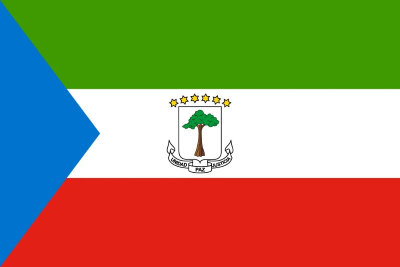
Officially known as the Republic of Equatorial Guinea, Equatorial Guinea is a small country on the west coast of Central Africa, with its mainland region bordering Cameroon to the north, Gabon to the south and east, and the Atlantic Ocean to the west. It has a tropical climate with dense rainforests and rich biodiversity, along with having several islands in the Gulf of Guinea; the most important being Bioko Island and Annobón. Equatorial Guinea is one of the few African countries where Spanish is an official language. Its economy relies heavily on oil and gas, which has brought significant national income (though wealth is unevenly distributed), and though the population is relatively small, it includes several ethnic groups, such as the Fang and Bubi peoples.
Its capital, Malabo, is located on Bioko Island, and it serves as the political and administrative centre of the country. The city is known for its colonial-era architecture, coastal setting, and government buildings. Although Malabo is currently the capital, Equatorial Guinea's government is developing a planned city on the mainland called Ciudad de la Paz (Oyala), intended to eventually share or take over some capital functions.
Floods, droughts, extreme heat, and increasingly severe storms, along with potential risks of earthquakes, landslides, and tsunamis.
There are frequent police checkpoints across Equatorial Guinea, where authorities may require fines on the spot. But it is advisable to get written citations rather than paying arbitrary amounts as some officers may attempt to solicit cash fines. Officers commonly stop drivers to inspect licences, passports, vehicle registration, and insurance. Failure to produce valid documents can lead to detention, fines or confiscation of your vehicle. Penalties for driving and traffic violations include:
Many fines are not widely published online, but serious offences like driving under the influence (DUI) and reckless/dangerous driving can result in substantial fines with potential arrest or criminal charges, or penalties beyond routine fines that include detention or court proceedings.
Other offences to keep in mind include:
The official languages of Equatorial Guinea are Spanish, French, Portuguese and Equatoguinean Portuguese.
Driving is done on the right side of the road in Equatorial Guinea. The minimum age to drive is 18, where the minimum renting age is 21, though it may be higher for some rental companies (25 for example), and others would charge a young driver surcharge to those under 25. UK drivers need a 1949 International Driving Permit (IDP) alongside their valid licence to drive and rent in Equatorial Guinea.
Main roads in major cities like Malabo and Bata are largely paved, but roads outside urban centres are unpaved, poorly maintained, potentially lacking in lighting and signage, and can get very muddy in the rainy season. Try to evade night driving where possible, watch out for livestock and pedestrians on rural roads, be alert to petty crime and checkpoints in both urban and remote areas, and rent out a 4×4 if you're travelling to rural areas. Also, police and military roadblocks are common, so keep your documents in hand.
Unleaded petrol and diesel are widely available in Equatorial Guinea, but biofuels and EV charging are not available at all. Most stations are attendant-staffed and would fill up for you, but when you're in a self-service station, keep your doors locked and valuables out of sight while refuelling. Cash is always accepted. However, card is not widely accepted, especially outside major urban centres, and ATM machines in rural areas can be unreliable or empty, so withdraw enough cash before long drives.
Fuel stations are common in cities and towns like Malabo, Bata, Ebebiyín and Mbini, but are sparse in rural areas. Always fill up before long journeys and whenever possible, and don't try to refuel at night as many stations may close earlier than expected, and rural stations may not operate 24/7.
The BAC limit is 0.05%, though it's highly recommended to avoid driving after any alcohol. Zero tolerance is applied to drivers underage.
Required for all occupants.
Though child seat regulations are not specifically defined, expect rules similar to many nations where children under 12 are required to use seats or boosters.
Check out more of our Country Guides: