
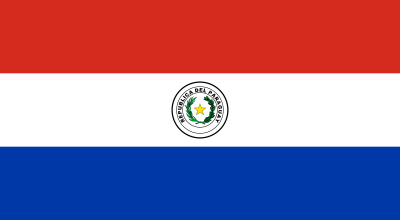
Known officially as the Republic of Paraguay, Paraguay is a landlocked country in the heart of South America, often called the 'Corazón de Sudamérica' (Heart of South America). The country is divided by the Paraguay River into two distinct regions: the Oriental Region in the east (more populated, with forests, hills, and agricultural land), and the Occidental Region/Chaco in the west (sparsely populated, with dry forests and savannas). Paraguay is known for its mostly subtropical climate (with hot summers and mild winters), and having a huge and vital agriculture that plays a major role in the country's economy (includes soybeans, beef, corn and energy exports).
Its capital, Asunción, is one of the oldest cities in South America. Located on the banks of the Paraguay River, the city is sometimes called the 'Mother of Cities' due to it being used by early Spanish expeditions as a base to found other regional cities. Asunción is known for its colonial architecture, vibrant markets, museums, and important buildings like the Palacio de los López (presidential palace) and the National Pantheon of the Heroes, along with being the political, economic, and cultural centre of Paraguay, and possessing a mix of historic neighbourhoods and modern districts, with a growing restaurant and arts scene.
Severe flooding, El Niño, extreme heat, droughts, and wildfires.
For traffic/driving offences;
For serious ('faltas graves') or very serious ('faltas gravísimas') offences, with fines within 4 – 20 jornales, additional penalties may include: point‑deductions, temporary or permanent suspension of driving licence, even vehicle impoundment or other sanctions. If a driver voluntarily acknowledges the offence early, fines may be reduced by 25% (though this reduction is not allowed in the gravest offences).
The official languages of Paraguay are Spanish and Guarani.
Driving is done on the right-hand side. The minimum driving age is 18, but the renting age is generally 21, with some rentals requiring drivers to be 25, or would charge a 'young driver' fee to those under 25. Rentals would also require a credit card and a passport. UK drivers can use their valid UK licence in Paraguay, but it's highly recommended to also carry an International Driving Permit (IDP), especially the 1949 or 1968 version, for rentals and police.
Road safety is a concern in Paraguay — accidents are not rare. Some rural roads are unpaved, poorly lighted or poorly maintained, with bad signage, animals/pedestrians crossing the road, and heavy rain making them impassable. Check road and weather conditions before you explore outside cities, ensure car is in good shape, and avoid driving at night. In addition, local drivers sometimes don’t respect traffic rules, meaning that you'll need to drive defensively and anticipate unpredictable behaviour.
Paraguayan fuel stations typically offer Nafta (Gasoline) 93/95/97+, Diesel común (regular)/premium, and ethanol-blended gasoline (E25 - E27). Stations are mostly full-service, but keep an eye on the pump like in any country. Cash is always accepted, but card is not guaranteed in rural areas. Fuel is easily available in cities, same for highways between cities, but stations are spaced out, and stations can be far apart in rural areas. Best to fill up whenever you can if travelling outside urban zones.
The legal limit is 0.08%.
Mandatory for all passengers.
Children under 10 must ride in the back seat, and children under 5 must use a specific Child Restraint System (CRS) or special safety seat.